A first plan meeting is usually the moment where the most funding is decided with the least preparation. The planner has a standard set of questions, and knowing them in advance changes how much you get.
The questions, and how to answer them
What does a typical week look like? Describe an ordinary one, not the best or the worst.
What can you do without any help at all?
What does somebody else do for you, and how often?
What happens when the support you rely on does not turn up?
What have you had to stop doing that you want to start again?
What would make the biggest difference to your week?
Who else supports you, and for how many hours a week?
What equipment or technology would make things easier?
What has changed since your last plan?
Are there health or safety concerns we should know about?
Is there anything you want us to write down that people forget to ask for?
The last question is the one people skip, and it is often worth the most.
After the meeting
The plan arrives within a few weeks. Read every line against what you asked for, because omissions are common. If something is missing you have three months to request an internal review, and asking is free.
Wound care is a critical part of supporting individuals recovering from surgery, illness, injuries, or chronic health conditions. Whether you’re a family caregiver or a professional, understanding wound assessment and management is essential for preventing complications, accelerating healing, and ensuring comfort.
This comprehensive guide provides everything you need to know for delivering safe and effective wound care at home.
Introduction
Wounds may seem straightforward, but without proper care they can quickly become serious medical concerns. Poorly managed wounds can lead to infections, delayed healing, chronic pain, and even hospitalization. That’s why accurate wound assessment and consistent wound management are vital.
At Caring Buddy, we aim to empower caregivers with practical knowledge that reduces stress and promotes safe, informed decision-making. This article covers everything you need to know from identifying wound types to choosing the right dressing and recognizing signs of infection.
Understanding Wound Assessment
Wound assessment is the systematic process of evaluating a wound’s condition to determine the most effective treatment plan. Regular assessment allows caregivers to track healing progress and respond promptly to risks.
Key Components of Wound Assessment
1. Identify the Wound Type
Different wounds require different approaches. Common categories include:
Monitoring the length, width, and depth helps determine whether the wound is healing or worsening.
3. Examine the Wound Bed
The wound bed’s appearance provides clear indicators of healing:
Red granulation tissue: healthy healing
Yellow slough: may require cleaning
Black eschar: dead tissue needing professional evaluation
4. Assess the Edges and Surrounding Skin
Look for swelling, softness, dryness, maceration (over-moisture), or discoloration.
5. Evaluate Exudate (Drainage)
Serous (clear) – normal
Serosanguinous (pink) – healing
Purulent (yellow/green) – possible infection
6. Monitor Pain Levels
Sudden or severe pain can signal complications.
7. Watch for Infection
Warning signs include foul odor, fever, spreading redness, pus, or warmth around the wound.
The Importance of Wound Management
Wound management involves providing ongoing care to encourage healing while preventing infection and discomfort. Effective management improves recovery time, minimizes scarring, and enhances overall well-being.
Essential Steps in Wound Management
1. Maintain Proper Hygiene
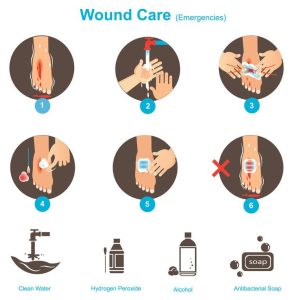
Clean hands, gloves, and sterile supplies are essential. Always begin by washing hands thoroughly and cleaning the wound with saline or recommended wound cleansers. Avoid harsh chemicals unless directed by a healthcare professional.
2. Debridement (Removing Dead Tissue)
Dead tissue slows healing and increases the risk of infection. Depending on the wound’s condition, caregivers may use:
Caring Buddy offers personalized wound care services delivered by trained caregivers who specialize in:
Comprehensive wound assessment
Safe and hygienic dressing changes
Infection prevention
Pressure ulcer management
Mobility and repositioning assistance
Education for family caregivers
Our goal is to ensure comfort, safety, and faster healing for your loved one in the familiarity of their home.
Conclusion
Wound assessment and management require knowledge, consistency, and a compassionate approach. Whether dealing with a simple cut or a complex chronic ulcer, understanding how to evaluate, clean, and protect a wound can make all the difference in the healing process.
With the right information and the support of Caring Buddy you can confidently care for wounds while protecting your loved one’s health and dignity.
To be eligible for the National Disability Insurance Scheme (NDIS) in Australia, a person must meet specific criteria related to age, residency, and disability. Generally, you may qualify if you are aged between 7 and 65, live in Australia as a citizen or permanent resident, and have a permanent and significant disability that affects your ability to take part in everyday activities.
But eligibility isn’t just about a diagnosis, it’s about how your condition impacts your daily functioning, independence, and need for support. The NDIS is designed to assist people whose disabilities affect their mobility, communication, social interaction, learning, self-care, or self-management.
This guide covers everything you need to know about NDIS eligibility including age, residency, disability criteria and what to do if you’re unsure where you stand.
Already know you qualify? Caring Buddy will help you build your support plan together.
What is NDIS and Its Purpose?
The National Disability Insurance Scheme (NDIS) is Australia’s national program for providing funding to people with permanent and significant disabilities. It supports individuals in achieving greater independence, accessing the community and improving their daily quality of life.
The purpose of the NDIS is to give people more choice and control over their support. It funds services and assistance tailored to a person’s specific needs, goals and circumstances rather than offering a fixed set of services.
Read our full guide on What is NDIS to understand in detail.
Who Can Access the NDIS in Australia?
To access the NDIS, a person must meet several eligibility requirements related to age, residency and the nature of their disability. These criteria are assessed by the National Disability Insurance Agency (NDIA), which manages access to the scheme.
Eligibility is not based solely on a medical diagnosis. Instead, the NDIS looks at how a person’s condition impacts their ability to carry out everyday activities such as moving around, communicating, caring for themselves, or participating in the community. In some cases, early intervention support may also be available to reduce the long-term impact of a disability.
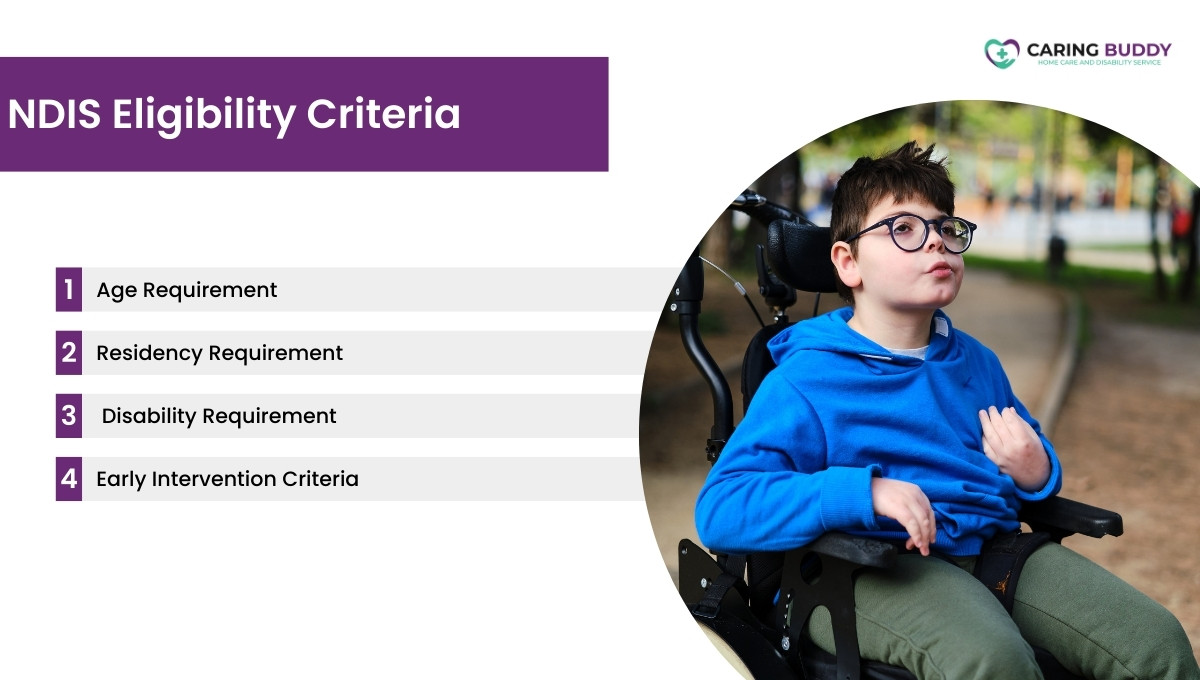
Eligibility for the NDIS is based on a few key areas that help determine whether a person qualifies for support. These include age, residency status and the extent to which a disability impacts daily life.
Each of these criteria is assessed by the NDIA to ensure that support goes to those who need it most.
Age Requirement
To be eligible for the NDIS, you must be aged between 9 and 65 at the time you apply. If you’re under 9, there may still be support available through the NDIS Early Childhood Early Intervention (ECEI) pathway. For individuals over 65, other programs such as aged care services may be more suitable.
The age criteria help the NDIA determine which support system is best suited to the person’s stage of life and long-term needs.
Residency Requiremen
You must live in Australia and be one of the following:
An Australian citizen
A permanent resident
A Protected Special Category Visa holder
Applicants will need to provide documentation that confirms their residency status. The NDIS does not extend to temporary visa holders or those living overseas, even if they are Australian citizens.
Disability Requirement
The NDIS is designed to support people with a permanent and significant disability that affects their ability to participate in daily life. This includes impairments related to:
Physical ability
Intellectual functioning
Sensory perception
Cognitive skills
Psychosocial health
The NDIA will assess how much the disability affects your ability to do things like communicate, move around, take care of yourself, or manage your emotions. The focus is on functional impact, not just having a diagnosis.
Early Intervention Criteria
Some people may be eligible under the NDIS early intervention rules. This applies when support at an earlier stage is likely to reduce future needs or prevent a condition from worsening.
Early intervention may be available to both children and adults. It applies when there is evidence that timely support can improve functioning or reduce the long-term impact of a condition or developmental delay.
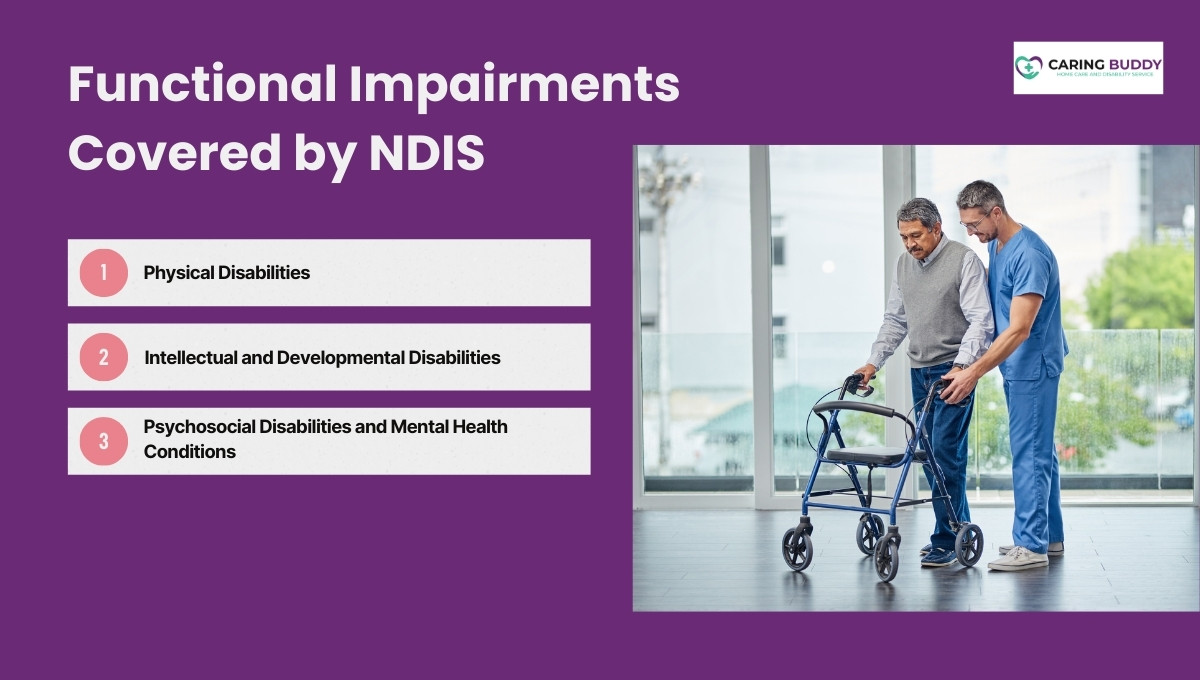
Functional Impairments Covered by NDIS
The NDIS focuses on how a person’s disability affects their ability to function in everyday life. It’s not just about having a medical diagnosis. It’s about how that condition limits your capacity to participate in activities like communication, personal care, learning or mobility.
Functional impairments can fall into different categories, and the NDIS considers each of them when assessing eligibility. Below are the main types of impairments commonly supported under the scheme.
Physical Disabilities
These include conditions that affect movement, strength, coordination or stamina.
Examples may include cerebral palsy, spinal cord injuries, muscular dystrophy or limb amputations.
If a physical condition limits your ability to complete tasks like dressing, showering, or using public transport, it may meet the NDIS access criteria.
Intellectual and Developmental Disabilities
These are conditions that affect cognitive functioning, reasoning, or learning.
Common examples include Down syndrome, autism spectrum disorder and developmental delays.
The NDIS looks at how these challenges affect daily skills like problem-solving, communication, or decision-making.
Psychosocial Disabilities and Mental Health Conditions
Psychosocial disability refers to the functional impact of mental health conditions like schizophrenia, bipolar disorder, PTSD or severe anxiety. Not everyone with a mental health diagnosis will be eligible for the NDIS. However, if the condition is ongoing and significantly affects participation in everyday life, it may meet the criteria.
Applicants with psychosocial disability will usually need to show evidence that the condition is persistent. It must also require long-term support and create barriers to functioning across multiple areas of life.
What Evidence or Documents Do You Need?
When applying for the NDIS, providing the right supporting documents is an important part of the eligibility process. The NDIA uses this evidence to understand how your disability affects your daily life and whether it meets the access requirements.
Evidence should clearly show that your condition is permanent, significant, and has a functional impact. This usually includes:
Medical reports or assessments from your GP or specialist
Functional assessments from allied health professionals like occupational therapists, psychologists or speech pathologists
Letters or statements that explain how your condition affects key areas of life such as communication, mobility, self-care or social interaction
The more detailed and relevant your documentation, the easier it is for the NDIA to make a decision. It’s not about collecting every document you have. It’s about showing clear, up-to-date information that supports your application.
How Is NDIS Eligibility Assessed?
Once you’ve submitted your application, the NDIA reviews your eligibility using a structured assessment process. This involves checking your age, residency status and the supporting evidence you’ve provided about your disability and how it affects your daily life.
The key tool used in this process is the Access Request Form (ARF). This form includes:
your personal details and a section for health professionals to outline the nature of your disability
how long it’s expected to last, and
how it impacts your ability to function.
In some cases, the NDIA may request additional information if more clarity is needed.
Eligibility is not based on diagnosis alone. What matters most is whether your condition causes substantial and ongoing difficulty in key areas of life, such as:
Mobility communication
self-care or social interaction, and
whether you need support now and into the future.
Common Questions About NDIS Eligibility
Does autism qualify for NDIS?
Yes, autism spectrum disorder (ASD) is one of the most commonly supported conditions under the NDIS. Eligibility depends on the level of support needed. People with Level 2 or Level 3 autism are more likely to meet the criteria due to the higher level of functional impact.
Can I get NDIS for anxiety or PTSD?
Possibly. Anxiety, PTSD and other mental health conditions may qualify as psychosocial disabilities if they are severe, ongoing and significantly impact your day-to-day functioning. You’ll need strong evidence showing the condition is persistent and requires long-term support.
Can I apply without a formal diagnosis?
In most cases, the NDIA requires a formal diagnosis to assess eligibility. Early intervention may also apply to children without a confirmed diagnosis. Support can still be available if there is clear evidence of developmental delay or other risk factors.
What conditions are not covered by NDIS?
Conditions that are short-term, treatable, or have minimal impact on daily functioning typically do not meet NDIS eligibility criteria. For example, temporary injuries or mild mental health conditions that don’t interfere with core activities are unlikely to qualify.
How long does NDIS approval take?
After submitting a complete Access Request with supporting evidence, it usually takes around 21 business days for the NDIA to make a decision. Delays can occur if additional information is needed or if the documentation is incomplete.
Is there an NDIS eligibility checklist?
While there’s no official NDIA-issued checklist, many providers and local area coordinators offer general guides. These typically include age, residency, type of disability and required documentation. It’s best to speak with a professional if you’re unsure about your status.
Need help figuring out where you stand? Contact Caring Buddy for friendly guidance and personalised support.
Yes, autism spectrum disorder (ASD) is one of the most commonly supported conditions under the NDIS. Eligibility depends on the level of support needed. People with Level 2 or Level 3 autism are more likely to meet the criteria due to the higher level of functional impact.
Possibly. Anxiety, PTSD and other mental health conditions may qualify as psychosocial disabilities if they are severe, ongoing and significantly impact your day-to-day functioning. You’ll need strong evidence showing the condition is persistent and requires long-term support.
In most cases, the NDIA requires a formal diagnosis to assess eligibility. Early intervention may also apply to children without a confirmed diagnosis. Support can still be available if there is clear evidence of developmental delay or other risk factors.
Conditions that are short-term, treatable, or have minimal impact on daily functioning typically do not meet NDIS eligibility criteria. For example, temporary injuries or mild mental health conditions that don’t interfere with core activities are unlikely to qualify.
After submitting a complete Access Request with supporting evidence, it usually takes around 21 business days for the NDIA to make a decision. Delays can occur if additional information is needed or if the documentation is incomplete.
While there’s no official NDIA-issued checklist, many providers and local area coordinators offer general guides. These typically include age, residency, type of disability and required documentation. It’s best to speak with a professional if you’re unsure about your status.
Need help figuring out where you stand? Contact Caring Buddy for friendly guidance and personalised support.
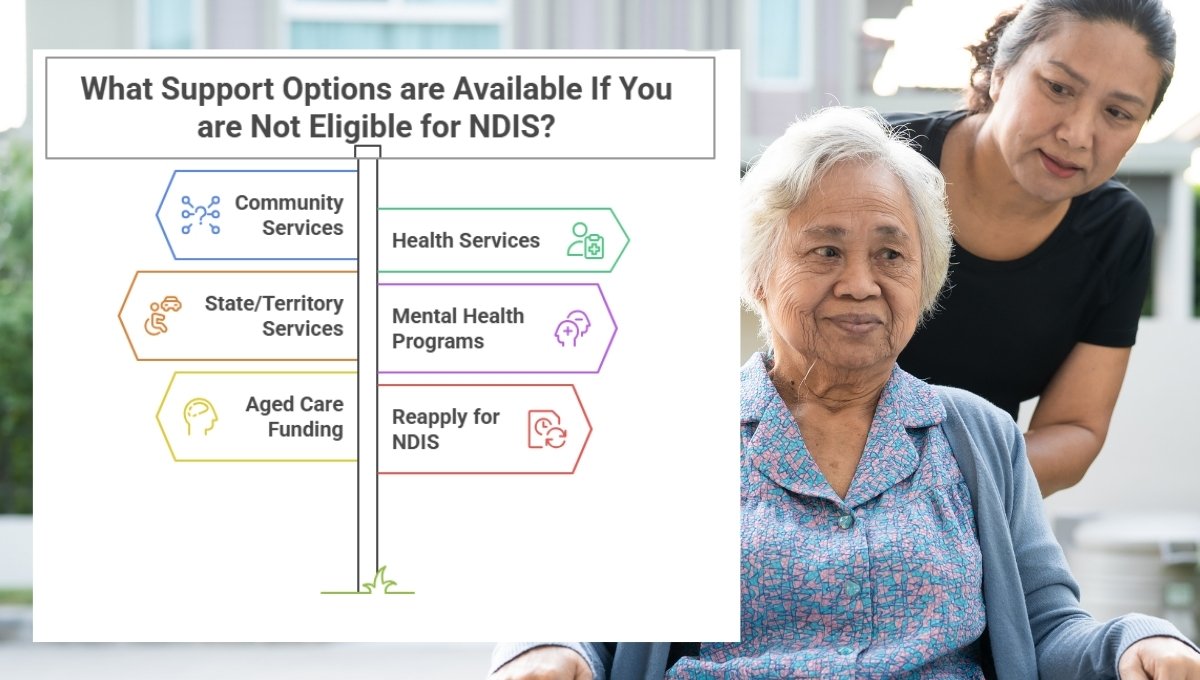
What If You’re Not Eligible for NDIS?
If you don’t meet the eligibility criteria for the NDIS, there are still other options for support. Not being eligible doesn’t mean you’re alone. There are community, health and disability services available outside the scheme that may be able to help.
You can speak with a Local Area Coordinator (LAC) or a community health service to explore alternatives. Depending on your needs, you might be eligible for support through state or territory disability services, mental health programs, or aged care funding. In some cases, you may be able to reapply for the NDIS later if your circumstances change or you have stronger supporting evidence.
Are You Eligible & Need Support With Your NDIS Journey?
If you’re already approved for the NDIS, your next step is choosing a support provider. It’s important to work with someone who understands your goals and needs.
Caring Buddy is the registered NDIS provider in Australia. We help NDIS participants across Northern Melbourne access personalised, consistent and compassionate NDIS services. From personal care and household support to psychosocial and mental health assistance, we’re here to make your journey easier.
If you’re ready to get started or simply want to talk it through, call us on 1300 001 615 or submit an enquiry. We’ll walk with you every step of the way.
Understanding your NDIS plan starts with knowing what supports are funded, what expenses aren’t covered, and when you can ask for a replacement support. At CaringBuddy, we break it down simply so you can make the most of your plan.
This guide explains:
What’s included in NDIS supports with real examples. What the NDIS does not fund and why. How replacement supports work and when to request them.
We’re here to help you feel confident and in control of your NDIS journey. Let’s get started.
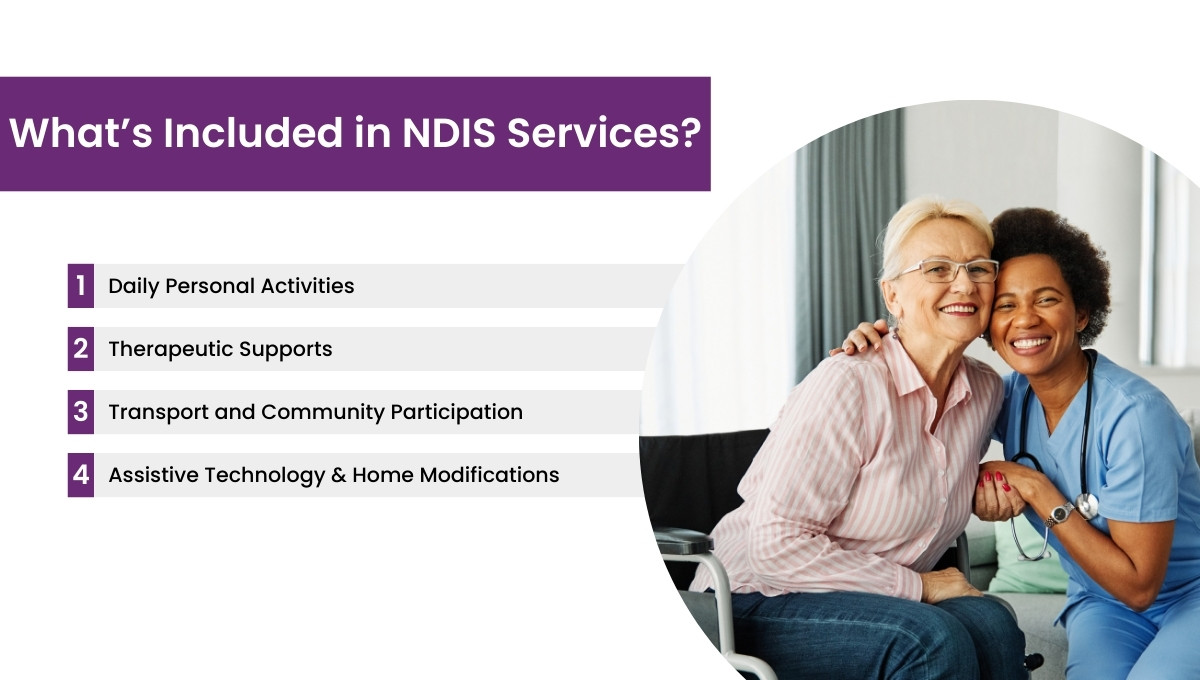
What’s Included in NDIS Services?
NDIS services include reasonable and necessary supports that help people with disability live more independently, improve daily life, and work toward personal goals. These supports are delivered by an NDIS provider, tailored to each participant’s needs, and reviewed during plan meetings.
Funded NDIS supports typically include:
Daily Personal Activities
NDIS funds daily personal support that increases independence in routine self-care tasks.
Common supports include:
Assistance with showering, grooming, and dressing.
Help with meal preparation and nutrition support.
Support workers who assist with daily living routines at home or in the community.
Therapeutic Supports
Therapeutic supports improve functional capacity and wellbeing.
Approved therapies often include:
Occupational therapy to enhance everyday skills and mobility.
Physiotherapy to improve strength, balance, and movement.
Speech therapy for communication or swallowing challenges.
Behavioural therapy to build emotional regulation and social skills.
Transport and Community Participation
NDIS provides transport and social access supports that reduce isolation and build confidence.
These supports may include:
Transport assistance for school, work, appointments, or social events.
A support worker to encourage community engagement and participation.
Support to access volunteering, group activities, or recreation programs.
Assistive Technology & Home Modifications
Assistive technologies and home modifications make everyday living safer and more accessible.
Funded items may include:
Mobility aids like wheelchairs or walkers
Hearing aids or communication devices
Home upgrades such as grab rails, ramps, non-slip flooring, or accessible kitchen layouts
Support Coordination and Plan Management
NDIS funds coordination and management support that help you get the most from your plan.
These services include:
Support coordination to connect with service providers and organise supports.
Plan management to track spending, pay invoices, and simplify admin.
What’s Not Included in NDIS Services?
The NDIS excludes supports that are not directly related to a person’s disability or are the responsibility of other government systems. These exclusions are outlined in the NDIS Act and Operational Guidelines.
The following types of expenses are not funded under the NDIS:
General Living Expenses
NDIS funding does not cover everyday living costs that everyone pays, whether or not they have a disability. This includes:
Rent or home loan repayments
Groceries and daily meals Electricity, gas, or water bills
Medical Services
Medical costs already covered by Medicare or the health system are not funded by the NDIS. These include:
GP or hospital appointments
Prescription medications
Dental treatments and checkups
Education Costs
School-related expenses are managed by the education system, not the NDIS. This includes:
Tuition fees, school uniforms, and books
Teacher support or mainstream school programs
Unlawful or Risky Items
The NDIS will not fund anything considered dangerous, illegal, or without proven benefit. This includes:
Alcohol, tobacco, or gambling expenses
Unregulated treatments or unsafe products
Duplicated Supports
If another government program already funds a support, the NDIS won’t duplicate it. Common examples are:
Aged care services
Public housing programs
Mainstream transport subsidies
Supports must be directly related to your disability and not funded elsewhere to be included in your plan.
What Are Replacement Supports?
Replacement supports are alternative items or services that take the place of something already approved in your NDIS plan. They must meet the same purpose and support the same disability-related need.
In simple terms, if one item no longer works for you, you can request to replace it with something that offers equal or better benefit – without increasing the cost of your plan.
What Counts as a Replacement Support?
A replacement support is an item or service that takes the place of something already funded in your NDIS plan. It must serve the same purpose, meet the same disability-related need, and not cost more than the original support.
For a support to qualify as a replacement, it must:
Replace an item already in your approved NDIS plan.
Provide equal or greater benefit to your daily living or independence.
Cost the same or less than the original support Be clearly linked to your disability needs.
Important: A replacement support is not an additional item. It uses your existing plan funds and does not increase your budget.
Examples of Replacement Supports
Replacement supports must serve the same purpose as an existing support and improve your daily function or independence. The NDIS considers these items in specific situations:
Smart Devices for Communication or Accessibility
Smart devices support communication and access needs. Eligible items include:
Tablets
Smartwatches
Smartphones
Communication app (e.g., AAC apps for speech support)
Example: A participant with a speech impairment may use a tablet with a speech-generating app instead of a face-to-face support worker.
Standard Household Items
Certain household appliances can be approved as replacement supports if they increase your independence and reduce your reliance on support workers.
Common examples include:
Washing machines: help you manage laundry without personal support
Dishwashers: reduce physical strain and time spent on household tasks
Microwaves: support safe, independent meal preparation
Each item must replace an existing funded support, cost the same or less, and directly relate to your disability needs. Approval depends on individual circumstances and how the item improves daily living.
How CaringBuddy Can Help
CaringBuddy helps NDIS participants get the most out of their plans by explaining what’s funded, what’s not, and what can be replaced. Our team ensures every support aligns with your goals and improves your independence.
Here’s how CaringBuddy supports you:
Explain your NDIS plan in simple terms
Identify potential replacement supports
Submit documentation and requests on your behalf.
Connect you with local, trusted service providers.
Need Support? Not sure if an item counts as a replacement support? Want to maximise your NDIS plan and achieve your goals faster?
Contact us today. Our expert team is here to help: step by step, every day.
The National Disability Insurance Scheme (NDIS) is Australia’s national support system for people with a permanent and significant disability. But what does that really mean and how does it work for you?
Whether you’re exploring support for yourself or assisting a family member or client, this guide breaks down the NDIS in a way that’s clear, practical, and specific to your needs in New South Wales (NSW) and Victoria (VIC).
As a trusted local provider, CaringBuddy helps Australians understand and navigate the NDIS, from eligibility and planning to accessing supports in your community. This guide will show you what the NDIS is, how it benefits participants, and how to take the next step with confidence.
What is the National Disability Insurance Scheme (NDIS)?
The National Disability Insurance Scheme (NDIS) is a government-funded program that provides personalised funding and support to Australians living with a permanent and significant disability.
Launched in 2013 and managed by the National Disability Insurance Agency (NDIA), it represents a major shift from the old one-size-fits-all model to one that puts the person with disability at the centre.
The NDIS supports a wide range of individuals. This includes children with developmental delays, adults who have acquired injuries, and people living with intellectual, psychosocial, or physical disabilities. It offers tailored services that align with each participant’s goals, capabilities, and unique circumstances.
If you’re a person with disability, a carer, support coordinator, or health professional in NSW or VIC, the NDIS helps you:
Gain access to vital disability supports and therapies
Receive funding for assistive technology, transport, home modifications, and more
Achieve personal goals related to independence, education, employment, and social inclusion
By focusing on choice and control, the NDIS empowers participants to choose the supports and providers that best meet their needs, including local experts like CaringBuddy.
Understanding the NDIS: Purpose, History & Goals
The National Disability Insurance Scheme (NDIS) was introduced to transform how disability support is delivered in Australia. Prior to the NDIS, support systems were fragmented, state-based, and often inaccessible for those who needed them most. The NDIS brought a unified, federally funded approach with a focus on fairness, empowerment, and lifelong inclusion.
The Purpose of the NDIS
The core aim of the NDIS is to provide individualised funding to eligible Australians, helping them pursue greater independence and better quality of life. The scheme recognises that every person’s needs and goals are different, and that support should reflect that.
A Brief History
2010–2013: The Productivity Commission proposed a national disability scheme, leading to the creation of the NDIS.
2013: Initial rollout began in trial sites across Australia.
2016–2020: Full rollout across all states and territories, including NSW and VIC.
Today: The NDIS supports over 500,000 Australians and continues to expand services through Early Childhood Partners, LACs, and remote outreach programs.
Key Goals of the NDIS
Enable choice and control over supports
Improve access to reasonable and necessary supports
Increase social and economic participation
Enhance long-term outcomes through early intervention
Build a more inclusive Australian society
The NDIS isn’t just a funding scheme – it’s a long-term commitment to empowering people with disabilities to live life on their own terms, with confidence, dignity, and support.
Who is Eligible for the NDIS?
To access the National Disability Insurance Scheme (NDIS), you must meet specific eligibility criteria set by the National Disability Insurance Agency (NDIA). These ensure the scheme supports people who need it most, those living with a permanent and significant disability.
Use the table below to check if you or someone you care for may qualify:
Criteria
Requirement
Age
Be aged between 9 and 65 at the time of application.
Residency
Be an Australian citizen, permanent resident, or hold a Protected SCV.
Location
Be living in Australia at the time of application.
Disability
Have a permanent and significant disability that affects daily functioning.
Support Needs
Require ongoing support to complete everyday tasks or participate in community.
Early Support
May benefit from early intervention to reduce long-term support needs.
These criteria are assessed individually. You’ll need supporting documentation, such as functional assessments or specialist reports to show the impact of your disability.
Early Intervention: Supports for Children Under 9
Children younger than 9 don’t need to apply for full NDIS access right away. Instead, they can receive early childhood early intervention (ECEI) through Early Childhood Partners. This support is designed to:
Address developmental concerns early
Reduce the need for long-term supporT
Link families with therapy, education, and health services
This is especially helpful for children with autism, developmental delays, or social-emotional challenges.
Common Misconceptions About Eligibility
Let’s bust a few myths:
“Is the NDIS means-tested?” No. The NDIS is based on disability needs—not income or assets.
“Can I apply if I’m over 65?” No. If you’re over 65, you may be eligible for aged care services instead.
“Do I need a specific diagnosis?” Not always. What matters most is how your condition affects your daily life, not just the label.
How Does the NDIS Work?
The NDIS is designed to give people with disabilities more control and flexibility over the support they receive. It does this through individualised funding, coordinated planning, and long-term support tailored to each participant’s life goals.
Step 1: Accessing the NDIS
Before receiving funding, you need to be formally accepted into the scheme.
Here’s how to start:
Check Eligibility: Use the NDIS eligibility checklist.
Gather Evidence: Include functional assessments, reports from health professionals, or support letters.Submit an Access
Request: Call 1800 800 110, complete the Access Request Form (ARF), or visit your local LAC in NSW or VIC.
Wait for a Decision: The NDIA will assess your application and provide an Access Decision, either confirming eligibility or requesting more information.
Step 2: Creating Your NDIS Plan
Once you’re accepted into the scheme, you’ll work with a Local Area Coordinator (LAC) or planner to build a personalised NDIS plan. This document outlines:
Your current situation and functional capacity Short- and long-term goals
What supports and funding you’ll receive Preferred types of plan management
Planning meetings can be held in person, online, or over the phone, depending on your location and needs.
Step 3: Managing and Reviewing Your Plan
There are three ways to manage your NDIS funding:
Self-managed: You control the budget, hire providers, and manage invoices.
Plan-managed: A registered financial intermediary manages your budget and payments.
NDIA-managed: The NDIA pays your providers directly, and you choose only registered providers.
Plans are reviewed annually, or sooner if your circumstances change (e.g., health, goals, living situation). You can request a plan reassessment if your supports no longer meet your needs.
Who Delivers the NDIS and What are Their Roles?
The NDIS is delivered through a network of agencies and partners, each with a specific role to help you access, plan, and manage your support. Understanding these roles can make your NDIS journey smoother, especially if you’re based in NSW or Victoria.
National Disability Insurance Agency (NDIA)
The NDIA is the central government body that operates the NDIS. It assesses eligibility, allocates funding, and ensures plans meet the legal framework under the NDIS Act 2013. Every participant’s plan is ultimately approved and managed by the NDIA.
Local Area Coordinators (LACs)
LACs help people aged 9 to 64 understand, apply for, and implement their NDIS plan. In NSW and VIC, they’re based in local communities and provide ongoing plan support, goal-setting assistance, and community connections, even for those not eligible for the scheme.
Early Childhood Partners
These are specialists who support children under 9 with developmental delays or disabilities. They offer early childhood intervention, therapy coordination, and referrals to local services like playgroups and paediatric healthcare – crucial for early development.
Remote Community Connectors
NDIS Connectors assist people in remote, rural, and culturally diverse areas. They focus on providing face-to-face, culturally respectful guidance around applying for and using NDIS plans, especially in Indigenous and CALD communities.
How to Apply for the NDIS in NSW/VIC
Applying for the NDIS can feel overwhelming, but with the right steps and local support you can navigate the process smoothly. Follow these steps to begin the journey, whether you’re applying for yourself or supporting someone else.
Check Your Eligibility Use the NDIS eligibility checklist to confirm you meet the age, residency, and disability criteria.
Gather Your Evidence Collect documents that explain how your disability affects daily life. These may include:
– Functional assessments – Medical or specialist reports – Allied health summaries (e.g., from occupational therapists, psychologists)
Submit an Access Request You can apply by:
– Calling the NDIS on 1800 800 110 – Visiting a Local Area Coordinator (LAC) office in NSW or VIC – Asking your GP or support coordinator to help you submit the Access Request Form (ARF)
Receive an Access Decision The NDIA will review your documents and notify you whether you’ve been accepted. If approved, you’ll be invited to a planning meeting.
How CaringBuddy Can Help?
As a local NDIS provider, CaringBuddy supports you throughout the application process. We can:
Help you gather the right evidence and fill out forms
Attend planning meetings with you or on your behalf
Liaise with your LAC or planner to ensure your goals are clearly understood
Prepare for plan implementation, including support coordination
If you’re unsure where to start, our team in NSW and VIC is here to walk you through each step, so you never feel lost in the process.
What Supports Are Funded Under the NDIS?
The NDIS empowers participants by funding a diverse range of supports that promote independence, confidence, and goal achievement. These supports are thoughtfully grouped into three key budget categories, each designed to address specific areas of life and personal growth.
Core Supports Core supports help with everyday activities and essential routines. This category covers personal care, transportation, meal preparation, and social participation, everything that ensures participants can live safely and actively in their communities. It also includes consumables like continence aids and low-cost assistive products.
Capital Supports Capital supports provide funding for important long-term investments, such as assistive technology and home or vehicle modifications. These are the tools and infrastructure that remove barriers and make daily living more accessible, whether it’s a wheelchair, a stairlift, or a communication device.
Capacity Building Supports This category focuses on helping participants develop skills and build confidence over time. It includes funding for therapies, life skills training, employment support, and even plan management. The goal is to increase a person’s ability to live independently, participate in the workforce, and stay connected to their community.
What is Not Funded by the NDIS?
While the NDIS covers a broad range of support, there are clear boundaries on what can and cannot be funded. Understanding these exclusions helps avoid confusion and ensures your funding is used effectively. Everyday Living Costs
The NDIS does not pay for expenses that everyone has, whether they have a disability or not. These include:
Rent or mortgage payments
Groceries and utility bills
Entertainment and general travel
These are considered general living expenses and fall outside the scope of disability-specific support.
Supports Not Related to Your Disability
Funding is only approved for supports that are directly related to your disability and necessary for achieving your goals. Items or services that don’t have a clear connection to your functional needs won’t be covered.
Duplicated Government Services
If another government system is already responsible for providing a particular support, the NDIS won’t duplicate it. For example:
Public hospital care
School education costs
Medicare-covered health services
Illegal or Unsafe Items
Naturally, the NDIS does not fund anything unlawful, unsafe, or against policy guidelines.
Important Update on Funded Supports
As of 3 October 2024, all NDIS-funded items must be listed in the official NDIS Support Catalogue. Make sure your provider references this when preparing quotes or invoices.
How CaringBuddy Helps You Navigate the NDIS in Australia
CaringBuddy is a local NDIS provider committed to helping participants in NSW and VIC understand, access, and make the most of their NDIS plans. We guide individuals and families through the application process, assist with gathering evidence, and support planning meetings to ensure each plan reflects the participant’s real-life needs and goals.
Beyond application, we provide support coordination, help manage services, and ensure your plan is implemented smoothly. Whether it’s connecting you to registered providers, assisting with plan reviews, or helping you build independence through community participation, CaringBuddy is here to walk with you every step of the way.
Ready to start your NDIS journey with local, trusted support? Contact CaringBuddy today and let’s take the next step together.
Frequently Asked Questions about the NDIS
What is the average NDIS amount?
NDIS funding varies widely depending on individual needs and support categories. For participants not in Supported Independent Living (SIL), the average annual plan budget is $78,600, with average payments around $63,000. Those in Supported Independent Living receive significantly more, averaging $447,400 per year in their plans, with payments averaging $409,400.
Participants with autism spectrum disorder typically receive about $32,800 annually, while children under 7 receive an average of $16,700 in early childhood funding.
What benefits can I get from NDIS?
NDIS benefits include access to therapy (e.g. psychology, speech, OT), personal care, assistive technology, home and vehicle modifications, employment support, transport, and more. The goal is to help you build capacity and live more independently.
What is the most common disability in NDIS?
As of recent data, autism spectrum disorder (ASD) is the most common primary disability among NDIS participants, followed by intellectual disability, developmental delay, and psychosocial disability. Specifically, 35% of NDIS participants have autism as their primary disability.
Is there an income limit for NDIS?
As of recent data, autism spectrum disorder (ASD) is the most common primary disability among NDIS participants, followed by intellectual disability, developmental delay, and psychosocial disability. Specifically, 35% of NDIS participants have autism as their primary disability.
Can I choose my NDIS service provider?
Yes. NDIS participants have full choice and control to select providers that align with their goals and preferences. You can choose between registered and unregistered providers depending on your plan type. CaringBuddy is a trusted, registered provider serving NSW and VIC.
NDIS funding varies widely depending on individual needs and support categories. For participants not in Supported Independent Living (SIL), the average annual plan budget is $78,600, with average payments around $63,000. Those in Supported Independent Living receive significantly more, averaging $447,400 per year in their plans, with payments averaging $409,400.
Participants with autism spectrum disorder typically receive about $32,800 annually, while children under 7 receive an average of $16,700 in early childhood funding.
NDIS benefits include access to therapy (e.g. psychology, speech, OT), personal care, assistive technology, home and vehicle modifications, employment support, transport, and more. The goal is to help you build capacity and live more independently.
As of recent data, autism spectrum disorder (ASD) is the most common primary disability among NDIS participants, followed by intellectual disability, developmental delay, and psychosocial disability. Specifically, 35% of NDIS participants have autism as their primary disability.
As of recent data, autism spectrum disorder (ASD) is the most common primary disability among NDIS participants, followed by intellectual disability, developmental delay, and psychosocial disability. Specifically, 35% of NDIS participants have autism as their primary disability.
Yes. NDIS participants have full choice and control to select providers that align with their goals and preferences. You can choose between registered and unregistered providers depending on your plan type. CaringBuddy is a trusted, registered provider serving NSW and VIC.
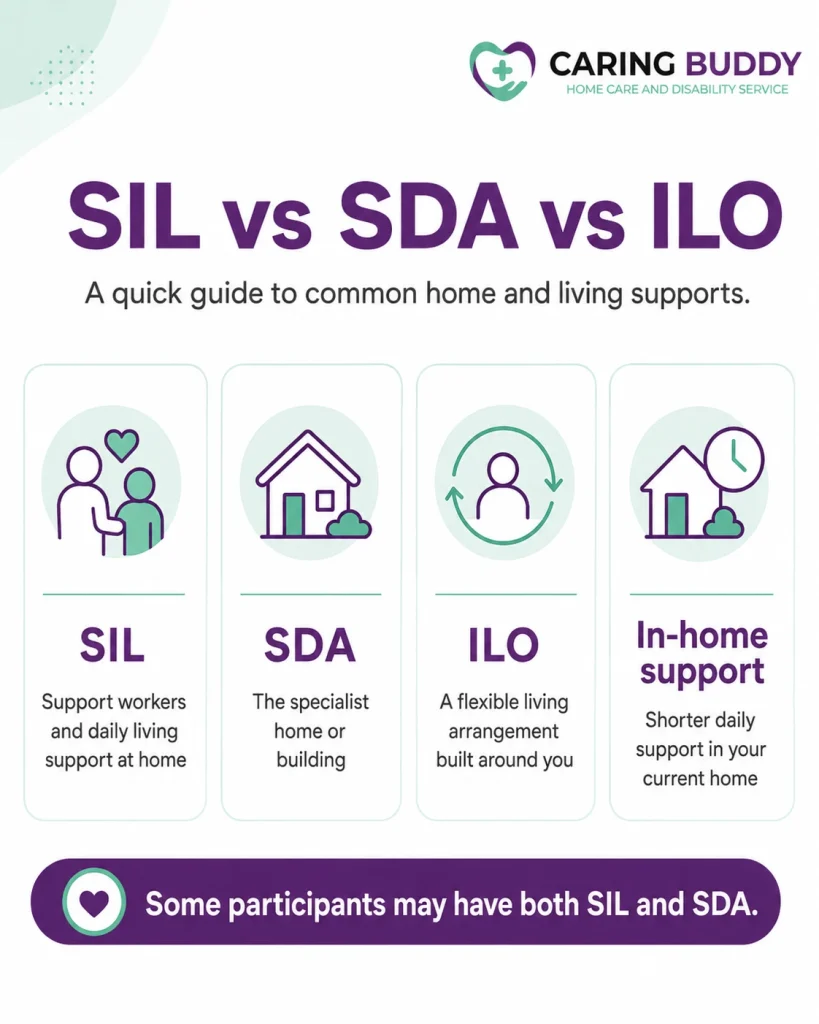
Supported Independent Living (SIL) is funding under the National Disability Insurance Scheme (NDIS) for the support workers who help you live as independently as possible at home. It can cover everyday help like personal care, cooking, cleaning, daily routines, supervision and overnight support, with the level matched to your needs. SIL pays for that support, not for the house itself.
This guide walks you through what SIL covers, who it suits, how funding works, and what the 2026 registration changes mean, so you can choose a SIL provider in Melbourne with confidence.
Key Takeaways
SIL is NDIS funding for support workers, not housing. It pays for help inside the home, not the home itself.
It usually suits people with higher support needs who need help across the day, overnight, or 24/7.
SIL is designed to build your independence over time, not just provide day-to-day help.
SIL doesn’t pay for rent, groceries or utilities.
SIL is different from Specialist Disability Accommodation (SDA), the building, and Individualised Living Options (ILO), a flexible living setup.
Who Is Supported Independent Living For?
Supported Independent Living is usually for NDIS participants with higher support needs, meaning people who need regular, person-to-person help at home across much of the day and often overnight.
The National Disability Insurance Scheme describes SIL as support for people who need help from a support worker 24 hours a day, 7 days a week. This may include shared support in a group home or individual support, depending on the participant’s disability-related needs.
SIL may be suitable if you:
Need active disability support for more than 8 hours per day.
Need supervision across the remaining hours.
Need overnight support, either sleepover or active.
Require help with personal care, meals, cleaning or household routines.
Want to develop daily living and social skills.
Live with other NDIS participants and share supports, or live alone and need a high level of home-based support.
Are exploring home and living supports in your NDIS plan.
SIL focuses on practical help and supervision inside the home. The exact support depends on your NDIS plan, goals, assessed needs and service agreement with the provider.
Personal Care and Daily Routines
SIL can include help with showering, dressing, grooming, getting ready for the day and preparing for bed. Good support doesn’t take control away from you. It helps you take part in your own routines as much as possible, with the right level of assistance for safety, dignity and comfort.
Cooking, Cleaning and Household Tasks
Support workers may help with meal preparation, cooking, washing up, cleaning, laundry and keeping the home organised, which the NDIS may also fund as household task support. For some people this means direct help. For others it means learning step-by-step routines that build independence over time.
Skill Building and Independence
SIL is designed to help you live as independently as possible. That can mean building skills in meal planning, cleaning, personal organisation, communication and household responsibility, always linked to your goals. You might want to learn to prepare simple meals, manage a morning routine, or feel more confident living away from the family home.
Supervision, Safety and Behaviour Support
Some participants need supervision to stay safe at home, whether that’s around household risks, communication, emotional regulation or behaviour support strategies. If you have a behaviour support plan, SIL workers may help follow the agreed strategies, which creates a safer and more predictable environment.
Medication Prompts, Appointments and Limited Community Access
SIL may include support connected to medication routines, appointments and some community access where it’s tied to personal tasks or written into your plan. Regular community participation, work, study or social activities are often funded separately. A good provider will explain what sits inside SIL and what needs arranging through other supports.
What Does SIL Not Pay For?
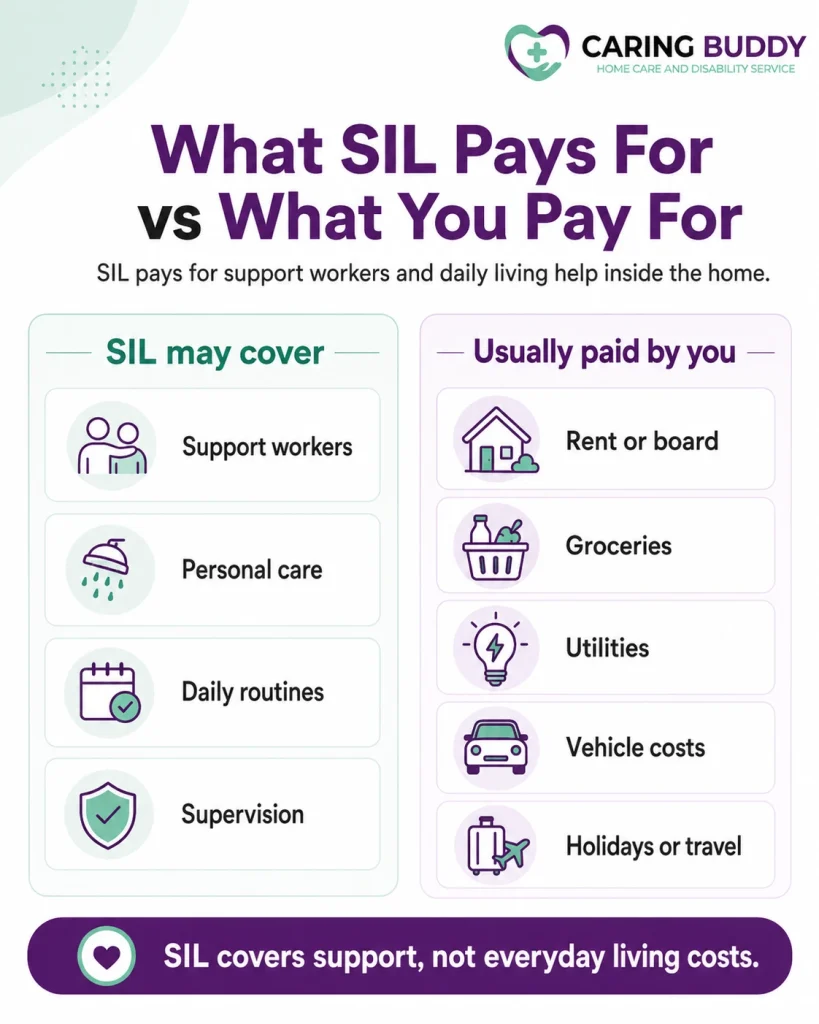
SIL pays for the support workers and the daily living help they give you inside the home, the personal care, cooking, cleaning, routines and supervision covered above. What it doesn’t pay for is the cost of living that everyone has.
SIL does not usually pay for:
Rent, board or lodging
Groceries and food costs
Gas, electricity, water, phone and internet
Vehicle costs
Holidays or travel
The physical house, apartment or building
Supports funded by health, hospital or justice systems
SIL vs SDA vs ILO: What Is the Difference?
SIL is different from Specialist Disability Accommodation (SDA), which is the building, and Individualised Living Options (ILO), a flexible living setup. This is also where the accommodation question gets answered: SIL pays for the support workers, not the home itself. The home might be a shared house with other participants, Specialist Disability Accommodation, a private rental, a family home, or a place you own.
Support type
What it means
What it usually funds
Who it may suit
SIL
Supported Independent Living
Support workers and daily living assistance in the home
Participants with higher daily support needs
SDA
Specialist Disability Accommodation
The specialist home or building
Participants with very high support needs or extreme functional impairment
ILO
Individualised Living Options
A flexible living arrangement designed around the participant
Participants who want a more customised home and support setup
In-home Support
Support delivered in your current home
Personal care, domestic tasks or daily support for shorter periods
Participants who do not need 24/7 SIL support
Some people have both SIL and SDA. There, SDA relates to the property, and SIL relates to the workers inside it. Others don’t need SDA at all and receive SIL in another suitable home, depending on their needs and funding.
How Does SIL Funding Work Under the NDIS?
SIL funding is included in a plan when the National Disability Insurance Agency (NDIA) decides it’s reasonable and necessary for your disability support needs. The NDIA may consider your current living situation, home and living goals, daily support needs, functional capacity assessments, allied health reports, behaviour support needs, and whether other home and living options would suit you better.
If SIL is approved, you and the provider usually develop a service agreement. The provider may also prepare a roster of care, which sets out the support pattern, staffing ratios and overnight arrangements.
Standard and High-Intensity SIL Support
SIL support can be standard or high-intensity, and the difference depends on how complex your support needs are.
Standard SIL is everyday support delivered by trained, screened workers. It covers the typical help most participants need at home: personal care, meals, cleaning, routines and supervision. This is the most common type of SIL support.
High-intensity SIL applies when you need workers with additional, specific training because of complex health or behaviour needs. This can include support like complex bowel care, enteral (PEG) feeding, ventilation, severe dysphagia, seizure management or complex wound care.
Not everyone needs high-intensity support. The right level should match your plan, goals and assessed needs, and a good provider will confirm which applies before support starts.
Shared Support and Individual Support
In many SIL arrangements, participants share workers with others in the home, which can work well when needs and routines are compatible. Some people need individual support for parts of the day or night. The right mix depends on your support needs, safety considerations and funding.
What Changed With SIL Provider Registration in 2026?
There’s a transition arrangement worth understanding. Providers already delivering SIL without registration must complete their application by 1 October 2026, and they can keep delivering while their application is processed only if they applied by that date. New providers entering the market after 1 July 2026 cannot deliver SIL until their registration is approved, with no grace period. Importantly for participants, your funding and eligibility don’t change as a result of this reform, but your provider must be registered from 1 July 2026.
SIL is a high-responsibility support. It can involve personal care, overnight assistance, behaviour support strategies and 24/7 help, so provider choice matters. When speaking with a SIL provider in Melbourne, ask:
Are you registered to deliver NDIS services, including SIL under the updated requirements?
How do you screen and train support workers?
How do you manage incidents, feedback and complaints?
How do you communicate with families, guardians and support coordinators?
How do you explain service agreements and support costs?
Can you show how support will match the participant’s NDIS goals?
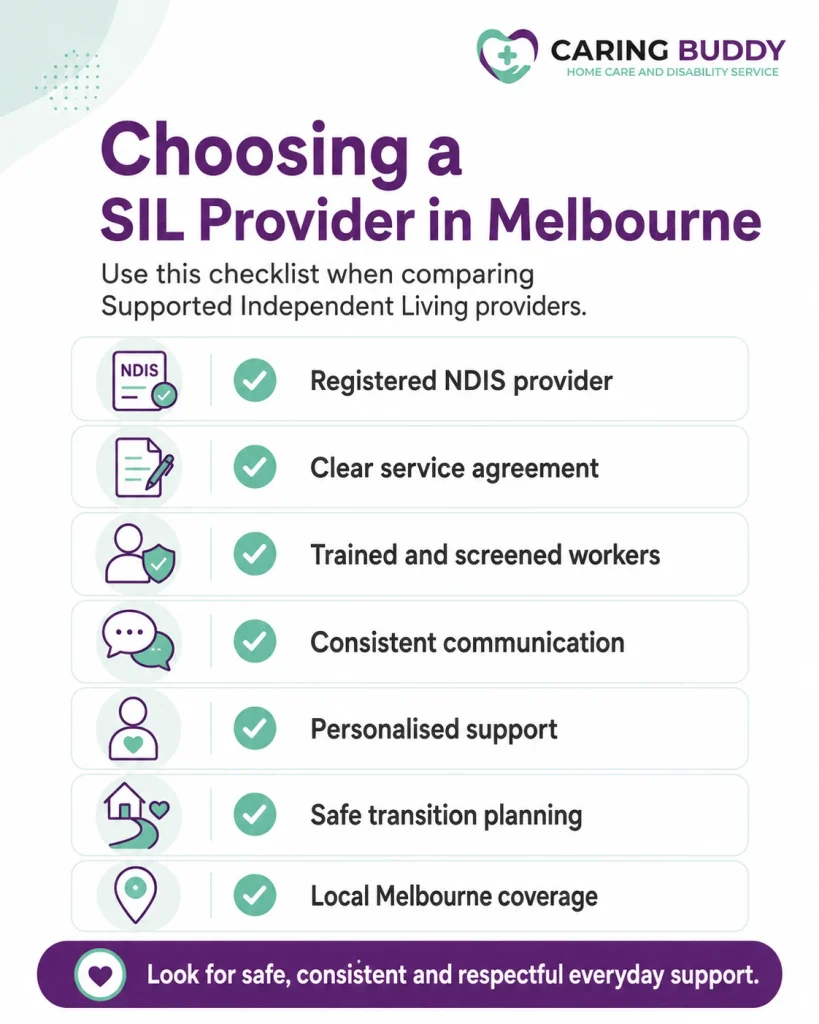
How to Choose a SIL Provider in Melbourne
Choosing a provider isn’t just about availability. It’s about finding a registered NDIS provider that delivers safe, consistent and respectful support in everyday life.
Use this checklist when comparing SIL providers in Melbourne:
Confirm registration and SIL capability. Check the provider is registered and can deliver SIL under current requirements.
Ask about local coverage. Make sure they support your suburb and understand local services, transport and community access.
Read the service agreement. It should set out what’s provided, how, responsibilities, cancellation rules and communication processes.
Discuss staffing and consistency. Ask how workers are matched, trained, supervised and replaced when someone’s unavailable.
Check how support is personalised. SIL should reflect your goals, routines, preferences, communication needs and culture.
Ask about transition support. Moving from a family home, hospital or another provider needs a careful plan.
Look for clear communication. A good provider talks respectfully with you and, with your consent, your support network.
How Caring Buddy Supports SIL Participants in Melbourne
We provide NDIS support services for participants across Melbourne, including Supported Independent Living for people who need help with everyday life at home. Our approach is person-centred and practical, built around independence. We work with participants, families, guardians, support coordinators and plan managers to understand routines, goals, support needs and safety.
Caring Buddy can support you with:
Personal care and daily routines
Cooking, cleaning and household tasks
Skill building for independent living
Support with routines, appointments and wellbeing
Overnight or 24/7 support where funded
Transition planning into a SIL arrangement
Communication with your support network
If you’re looking for Supported Independent Living in Melbourne, we can help you understand your options and discuss whether our support model fits.
Our services are subject to the participant’s NDIS plan and funding availability, and outcomes may vary depending on individual circumstances and plan funding.
Frequently Asked Questions About Supported Independent Living
What Is Supported Independent Living in Simple Terms?
It’s NDIS funding for support workers who help eligible participants with daily life at home, including personal care, cooking, cleaning, routines, skill-building, supervision, and overnight support. SIL usually suits people who need help throughout the day and night.
Do I Pay Rent If I Have SIL?
No. SIL funds support workers, not rent, so you pay rent or board from your own income, usually your Disability Support Pension. If you live in Specialist Disability Accommodation, your rent is capped at 25% of the base Disability Support Pension plus 100% of any Commonwealth Rent Assistance, which is an indicative maximum of around $516 per fortnight as at March 2026 (Housing Hub).
How Long Can You Stay in Supported Independent Living?
SIL isn’t time-limited. It’s an ongoing support, funded for as long as it remains reasonable and necessary for your needs, and reviewed at each NDIS plan review. That’s different from Short-Term Accommodation, which covers respite of around 28 days a year, and Medium-Term Accommodation, which is temporary housing for up to about 90 days while you wait for a long-term arrangement.
Can I Receive SIL While Living Alone?
Sometimes. SIL is often delivered in shared homes, but some participants receive it while living alone, depending on their support needs, funding and living arrangement. The NDIA looks at each person’s circumstances, and SIL is usually considered when someone needs help at home across much of the day and night.
What Is the Difference Between SIL and SDA?
SIL funds the support workers who help with daily tasks at home. SDA funds the specialist home or building for eligible participants with very high support needs. Some people have both, but they’re separate NDIS supports.
Do SIL Providers Need to be Registered?
Yes. From 1 July 2026, providers delivering SIL must be registered with the NDIS Quality and Safeguards Commission. Ask any provider about their registration status, quality systems and how they meet NDIS requirements.
How Do I Apply for SIL Funding?
Speak with your my NDIS contact, planner or support coordinator about your home and living goals. You may need evidence such as functional assessments, allied health reports and details of your daily support needs. Our guide on how to apply for the NDIS explains the evidence you may need.
Can I Change SIL Providers?
Yes. NDIS participants generally have choice and control over their providers, subject to service agreements, notice periods and funding. If your current provider isn’t the right fit, talk to your support coordinator or another provider about transition options.
Next Steps: Finding SIL Support in Melbourne
So, what is supported independent living (SIL)? In simple terms, it is NDIS funding for support workers who help eligible participants live more safely and independently at home.
The most important things to remember are:
SIL is usually for people with higher support needs
SIL can include help across the day, overnight or 24/7
SIL funds support workers, not rent or groceries
SIL is different from SDA, ILO and general in-home support
Registered SIL providers matter under the 2026 NDIS registration changes
If you are exploring SIL in Melbourne, Caring Buddy can help you understand your options, discuss your NDIS plan and work through the next steps with care.
As Healthcare continues to evolve, one question keeps coming up more often than ever: What is community nursing? The rise in chronic illnesses, aging populations, and the growing need for accessible care has pushed healthcare beyond hospital walls. Today, more people are receiving support in their homes, schools, and local communities-and community nurses are at the heart of this movement.
Community nursing is more than just another sector of healthcare. It represents a shift toward personalized, preventive, and relationship-focused care. Instead of waiting for people to go to hospitals or clinics, community nurses bring their expertise directly to the environments where people live, work, and grow. This approach creates healthier communities and helps individuals maintain independence, dignity, and confidence in managing their health.
Whether you run a caring business, manage a home-care agency, or simply want to understand how community healthcare works, this in-depth guide will walk you through everything you need to know.
What Is Community Nursing?
Community nursing is a specialized area of nursing that focuses on improving the health and well-being of individuals, families, and entire communities. Unlike hospital nursing, which concentrates on acute medical conditions, community nursing prioritizes long-term wellness, disease prevention, early intervention, and holistic care.
Community nurses work in a wide range of environments, including:
Private homes
Community health centers
Schools
Workplaces
Rural health clinics
Assisted living facilities
Public health departments
Their mission is simple yet impactful: to help people live healthier lives by providing accessible, compassionate, and proactive care right in their own communities.
Core elements of community nursing include:
Health promotion
Disease prevention
Education and awareness
Support for vulnerable populations
Management of chronic conditions
Collaboration with families and caregivers
Because they often work outside traditional clinical settings, community nurses develop close, trusting relationships with the people they care for. They see the daily realities of their patients’ lives, which helps them provide more personalized and realistic care plans.
Why Community Nursing Matters More Than Ever
Community nursing plays a vital role in modern healthcare systems. As populations age and chronic illnesses become more common, hospitals and clinics face overwhelming pressure. Community nursing helps address these challenges by offering support where it’s most effective-within the community itself.
Here’s why it matters so much:
1. Increases Access to Care
Not everyone has the ability or resources to regularly visit a hospital. Older adults, people with disabilities, individuals with limited transportation, and rural residents often struggle to reach traditional healthcare centers.
Community nursing eliminates these barriers by bringing healthcare directly to them.
2. Helps Reduce Hospital Admissions
Many hospital visits can be avoided with consistent monitoring and early intervention. Community nurses provide ongoing support, helping individuals manage long-term conditions like:
Diabetes
Heart disease
COPD
Hypertension
Arthritis
By catching potential issues early, they prevent emergencies, reduce hospital readmissions, and lower healthcare costs overall.
3. Focuses on Prevention and Education
Education is one of the most powerful aspects of community nursing. Nurses teach individuals and families how to:
Maintain healthy habits
Manage medications
Monitor symptoms
Improve nutrition
Reduce risk factors
Prevent infection
When people understand how to care for themselves, they’re far more likely to stay healthy.
4. Supports the Most Vulnerable Populations
Community nurses often help individuals who face physical, social, or economic challenges. These may include:
Older adults living alone
New mothers and infants
People with disabilities
Families in low-income communities
Individuals struggling with mental-health issues
Their support can make a significant difference in quality of life, safety, independence, and emotional well-being.
5. Promotes Stronger Public Health
Through immunization programs, screenings, counseling, and community outreach, nurses help prevent the spread of disease and encourage healthier lifestyles across entire communities.
Key Responsibilities of Community Nurses
Community nurses have diverse roles that require strong clinical skills, empathy, and adaptability. Their daily duties vary depending on where they work, but common responsibilities include:
1. Performing Home Visits
Nurses visit patients in their homes to assess health needs, monitor progress, and provide hands-on care. These visits allow them to see environmental factors that may affect the patient’s well-being.
2. Medication Management
Community nurses help patients understand and properly take their medications. They may:
Organize pill boxes
Review prescriptions
Monitor for side effects
Communicate with physicians
3. Wound Care and Post-Surgery Support
Proper wound care is essential for preventing infections and promoting healing. Nurses often provide:
Dressing changes
Post-operative monitoring
Education on hygiene and prevention
4. Chronic Disease Management
Long-term illnesses require consistent management. Community nurses help patients monitor symptoms, adjust lifestyle habits, and avoid complications.
5. Maternal and Child Health Support
Nurses assist with:
Prenatal education
Newborn care
Breastfeeding support
Child development monitoring
6. Health Education and Coaching
Teaching is a major part of the job. Nurses guide individuals and families through lifestyle changes that significantly improve health outcomes.
7. Mental Health Support
Community nurses provide emotional support and help connect individuals with mental health services when needed.
8. Vaccinations and Screening Services
They administer vaccines, conduct blood pressure checks, and provide health screenings to promote early detection of illness.
9. Collaboration With Healthcare Teams
Community nurses work closely with:
Doctors
Social workers
Therapists
Caregivers
Community organizations
This ensures that patients receive proper, well-coordinated care.
Types of Community Nursing Services
Community nursing encompasses multiple specialties. Some of the most common include:
1. Home Health Nursing
Provides personalized medical support in the patient’s home.
2. Public Health Nursing
Focuses on improving the health of entire populations through outreach and education.
3. School Nursing
Supports students’ health needs, from first aid to chronic condition management.
4. Occupational Health Nursing
Offers healthcare within workplaces to promote safety and well-being.
5. Family and Child Health Nursing
Assists families, new parents, and children with health education and assessments.
Each specialty plays a unique and essential role in building strong, healthy communities.
Skills Every Community Nurse Should Have
Community nursing requires a unique blend of clinical expertise and people skills. Essential skills include:
Strong assessment and critical-thinking abilities
Excellent communication skills
Empathy and emotional intelligence
Ability to work independently
Flexibility in unpredictable settings
Knowledge of public health principles
Cultural sensitivity
Up-to-date clinical training
These qualities help community nurses build meaningful relationships and deliver the most effective care possible.
How Community Nursing Benefits Caring Businesses
For care agencies, home support services, and community-based organizations, community nursing can significantly enhance the level of care offered. Benefits include:
1. Higher Client Trust and Satisfaction
Having a nurse visit at home builds confidence and reassurance for clients and their families.
2. Better Health Outcomes
With ongoing monitoring and support, clients experience fewer complications and improved quality of life.
3. Personalized Care Plans
Nurses can tailor care plans based on the client’s home environment, lifestyle, and individual needs.
4. Stronger Family Support
Nurses keep families informed, educated, and involved in the care process-reducing stress and confusion.
5. A Competitive Edge
Offering community nursing services helps care businesses stand out in a growing industry and attract more clients seeking holistic, trustworthy care.
Conclusion
Understanding what community nursing is helps highlight just how essential this profession has become in today’s healthcare landscape. Community nurses bring medical expertise, compassion, and education directly to individuals and families, making care more accessible and effective. Their work promotes independence, prevents illness, and strengthens entire communities.
For caring businesses, integrating community nursing practices can elevate service quality, build long-lasting relationships, and ensure better outcomes for the people they serve.
Community nursing isn’t just about treating health conditions-it’s about empowering people to live healthier, safer, and more fulfilling lives right in the heart of their own communities.
Want to learn more about NDIS support? Read More From Caring Buddy About NDIS and explore our guides designed to help you navigate services with confidence.
A plan review is a conversation with a delegate from the NDIA about whether your current supports are working and what you need next. It usually runs an hour. The decisions that come out of it set your budget for the following year, which is why the preparation matters more than the meeting itself.
The single most useful thing you can do is arrive with evidence that connects a support to a goal. Planners are not looking for a wish list. They are looking for a reasonable and necessary link between what you are asking for and what it will let you do.
Before the meeting
Ask your support coordinator for a copy of your current plan and read the goals section first. Those goals are the frame for everything else. If they no longer describe your life — you have moved, started work, or your health has changed — say so early, because new goals justify new supports.
A copy of your current plan, with the goals section marked up.
Recent allied health reports — ideally less than twelve months old.
A rough diary of a typical week, including the hours informal carers provide.
A list of anything that did not work this year, and why.
Every support you ask for needs a sentence that finishes with “so that I can”. Without it, the request reads as a preference rather than a need.
What the planner asks
Expect questions about a typical day, what you can do without help, what someone does for you, and what happens when support does not turn up. Answer on your worst day, not your best one. This is not pessimism — funding is set against the level of support you need when things are difficult, and describing only good days routinely produces plans that run out by March.
You will also be asked about informal supports: family, friends, neighbours. Be honest about what they actually do and for how long they can sustain it. A parent providing forty hours a week of unpaid care is relevant information, not a reason to reduce funding.
Evidence that carries weight
Reports from allied health professionals are the strongest evidence, particularly an occupational therapist’s functional capacity assessment. Service provider notes come next: rosters, incident records and progress notes show what has actually been delivered and what changed as a result.
Keep it recent. A report from three years ago describes a person who may no longer exist, and planners discount it accordingly. If a key assessment is out of date, book it before the review rather than after.
After the decision
You will usually receive the new plan within a few weeks. Read the budget lines against what you asked for, because errors are common and quietly expensive. If something is missing or has been cut without explanation, you have three months to request an internal review of the decision.
Do not wait for the review outcome to keep your supports running. Existing services continue under the current plan until the new one starts.
One of the most common questions people ask when exploring the National Disability Insurance Scheme (NDIS) is: “Does my disability qualify?”
At CaringBuddy, we understand how overwhelming the system can feel. This guide breaks down the types of disabilities the NDIS covers, using simple language and real examples, so you can understand whether you or someone you support may be eligible.
Understanding How the NDIS Decides Eligibility
The NDIS doesn’t approve people based on disability labels alone. Instead, it looks at:
Is the disability permanent?
Does it cause significant functional impairment?
Does the person need ongoing support?
So, the real key is not just the diagnosis but how the disability impacts everyday life.
That said, the NDIS does recognise many disabilities – including those listed in List A, List B, psychosocial disabilities, and other lifelong conditions.
1. Disabilities Automatically Recognised (NDIS List A)
List A includes disabilities that are almost always permanent, significant, and clearly meet NDIS access criteria.
If your disability is on List A, you generally only need evidence confirming your diagnosis.
Examples include:
Intellectual disability
Autism Spectrum Disorder – Level 2 or Level 3
Cerebral palsy – GMFCS level 3 and above
Down syndrome and other chromosomal anomalies
Fragile X syndrome (with full mutation)
Major brain injury resulting in significant impairment
Neurological degenerative conditions, such as:
Multiple sclerosis
Motor neurone disease
Huntington’s disease
These conditions are typically lifelong and significantly affect functional capacity.
2. Disabilities That May Meet Criteria With Strong Evidence (NDIS List B)
List B includes disabilities that might be permanent and functionally limiting, depending on severity. The NDIS requires functional evidence to show how they affect everyday life.
The key requirement is strong functional evidence.
Examples include:
genetic disorders not listed under List A
autoimmune conditions
undiagnosed developmental delays
complex multi-system conditions
The NDIS focuses more on how your disability affects daily life than the medical label.
How the NDIS Assesses Functional Impact
To determine eligibility, the NDIS looks at how your disability affects six key areas:
Mobility
Communication
Social interaction
Cognition
Self-care
Self-management
If your disability significantly impacts one or more of these areas, you may meet eligibility criteria.
What Evidence Do You Need to Prove Your Disability?
Most applications require:
a GP letter
specialist reports
allied health assessments
functional capacity assessments
school or support worker reports (for children or psychosocial disability)
If you’d like, I can create a free evidence checklist tailored to this article.
Examples of Disabilities That Commonly Qualify for NDIS
To make it clear, here’s a quick list of conditions frequently accepted:
Physical Disabilities
Spinal cord injury
Cerebral palsy
Muscular dystrophy
Neurodevelopmental Disabilities
Autism
ADHD (severe)
Intellectual disability
Psychosocial Disabilities
Schizophrenia
Bipolar disorder
PTSD
Neurological Disabilities
MS
Parkinson’s
Epilepsy
Sensory Disabilities
Blindness
Deafness
Complex / Multisystem Disabilities
Rare genetic syndromes
Severe chronic pain conditions
Key Takeaway: It’s the Impact That Matters
The NDIS doesn’t approve people based solely on their diagnosis. They look at how your disability affects your daily life and independence.
If your condition is:
permanent
significant
functionally limiting
and you need ongoing support
…then you may be eligible.
Need Help Understanding Your Eligibility?
CaringBuddy is here to help. Whether you’re exploring eligibility, preparing evidence, or navigating the application process, we’re ready to guide you with clarity and compassion.
Navigating the NDIS can feel confusing – especially when it comes to what evidence you actually need. At CaringBuddy, we know that clear guidance makes the process less stressful. This article breaks down the exact types of evidence the NDIS looks for, where to get them, and how to make sure your documentation supports the funding you need.
Whether you’re applying for the NDIS or updating your plan, this guide explains everything in simple, supportive language.
Why Evidence Matters for the NDIS
The NDIS uses your evidence to understand:
your diagnosis
how your disability impacts daily life
what supports you need and why they’re reasonable and necessary
Good evidence helps the NDIA make decisions faster and more accurately. Poor or incomplete evidence often leads to delays, underfunding, or requests for more documents.
1. What Evidence Do I Need to Apply for the NDIS?
To access the NDIS, you must show that you have a permanent and significant disability. The NDIA usually asks for two types of evidence:
Tip: The NDIA prefers evidence from a treating professional, not a one-off assessor.
B. Evidence of Functional Impact
This shows how your disability affects your daily life across areas such as:
communication
social interaction
mobility
self-care
learning
self-management
Useful evidence includes:
Occupational therapy (OT) functional assessments
Physiotherapy or exercise physiology reports
Speech therapy assessments
Psychology or neuropsychology reports
Behaviour support plans
School reports (for children)
Important: The NDIA needs to understand what you can and cannot do without support.
2. Evidence You Need When Updating or Reviewing an NDIS Plan
When you request a plan review, reassessment, or change in support, the NDIA wants current evidence. This should show:
changes in your condition
updated functional limitations
why you need new or additional supports
what supports you’re already using and their impact
A. Capacity-Building Assessments
These assessments help show whether your goals and support needs have changed.
Examples:
Updated OT functional assessments
Psychology progress reports
Speech therapy reports
Physiotherapy mobility assessments
These reports help the NDIA understand:
whether supports are working
whether you need more or different supports
any new risks, barriers, or safety concerns
B. Support Worker or Carer Impact Statements
These can be powerful because they explain:
how much support you need
how often tasks must be completed
what happens if support is not provided
They are especially helpful for people with:
psychosocial disability
intellectual disability
autism
degenerative conditions
C. Medical Letters From Your Treating Professionals
A GP, specialist, or therapist can write a letter that outlines:
your disability
its permanence
your functional limitations
recommended supports
the expected long-term needs
Tip: Encourage them to include specifics – e.g., “John requires 14 hours per week of support for meal preparation, household tasks, and community access.”
3. What Makes Good NDIS Evidence?
High-quality NDIS evidence is:
Recent
Within the last 12 months (unless condition is lifelong and stable).
Detailed
Describes frequency, severity, and impact.
Functional
Links your disability to what you struggle with in daily life.
Clear and professional
Written by someone who knows your condition well.
NDIS Evidence Example (Good vs. Poor)
Poor:
“Sarah has anxiety and struggles with daily tasks.”
Good:
“Sarah has severe social anxiety diagnosed by a psychiatrist. She cannot attend appointments alone, experiences daily panic attacks, and requires 1:1 support for shopping, public transport, and managing bills.”
The second example gives the NDIA what they need: function, impact, and support requirements.
4. Who Can Provide NDIS Evidence?
Medical Professionals
GPs
Neurologists
Psychiatrists
Paediatricians
Rehabilitation specialists
Allied Health Professionals
Occupational therapists
Psychologists
Physiotherapists
Speech pathologists
Behaviour support practitioners
Other Helpful Sources
Teachers
Support workers
Carers or family members (impact statements)
Support coordinators
5. What Evidence Is Required for Specific Supports?
Here’s a quick guide to common NDIS supports and the evidence usually required.
A. Personal Care & Support Workers
The NDIA will look for:
OT functional assessments
Carer impact statements
Daily living assessments
Supports to justify:
help with showering
cooking and cleaning
community access
medication prompting
B. Assistive Technology (AT)
For low-risk items:
Supplier quote
Short allied health recommendation
For higher-risk equipment (e.g., wheelchairs, hoists):
Comprehensive AT assessment
Trials and justification
Quotes from registered suppliers
C. Therapy Supports
The NDIA typically expects:
A therapy plan
Functional assessments
Clear goals
Evidence of progress
D. Home & Living (SDA/SIL/IL)
These require significant evidence, such as:
OT housing assessments
Functional capacity assessments
Behaviour support plans
Specialist medical letters
Risk assessments
Daily support logs
6. How to Make the Evidence Process Easier
At CaringBuddy, we help participants simplify the evidence process. Here’s what you can do to prepare:
Keep all reports in one place
Create a folder (digital or physical) with all assessments and letters.
Track your daily challenges
Take notes or use a diary. This helps you describe your functional needs.
Book regular reviews with your GP or therapist
They can update letters before your planning meeting.
Request an evidence summary
Your support coordinator or allied health team can write one for you.
7. Common Mistakes That Delay NDIS Decisions
Avoid sending:
Out-of-date reports (more than 2–3 years old)
Documents that only describe diagnosis
Letters without detail
Evidence with no functional impact
Reports written by people who don’t know you well
The more specific the evidence, the smoother your NDIS journey.
8. Final Checklist: What Evidence Do I Need for the NDIS?
When Applying:
Diagnosis confirmation
Functional impact evidence
GP letter
Allied health assessments
Any existing reports or school documents
Carer statements
When Updating Your Plan:
Updated therapy assessments
Progress reports
Functional capacity assessments
Support worker / carer impact statements
Quotes for any new supports
Medical letters supporting changes
Need Help Gathering Your NDIS Evidence?
CaringBuddy is here to make things easier. Whether you’re applying for the NDIS, preparing for a plan review, or gathering updated evidence, we can support you every step of the way with guidance that’s friendly, clear, and personalized.